Arabic - Kashmiri
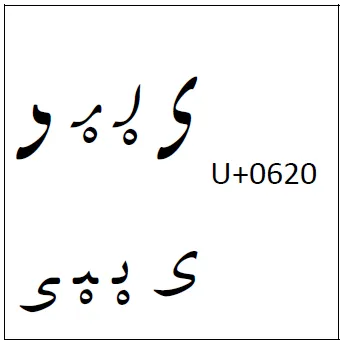
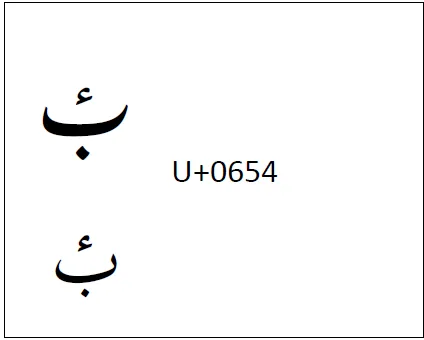
Kashmiri is generally written in the Nastaliq style of Arabic script and follows the Urdu letter design. The examples below describe display of some Kashmiri characters using Nastaliq style in the first line and Naskh in the second line.
ؠ was added specifically for the Kashmiri language, and its appearance in all four isolate, initial, medial, and final forms is somewhat different in that the circle only appears on the initial and medial forms. The isolate and finals have a short tail with no circle. The example below demonstrates the kashmiri yeh .
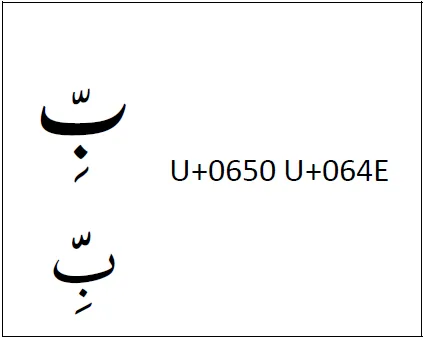
When used in conjunction with shadda, ◌ِ often forms a ligature with the kasra just below the shadda. Kashmiri does not follow this. The kasra appears below the base rather than forming a ligature with shadda.
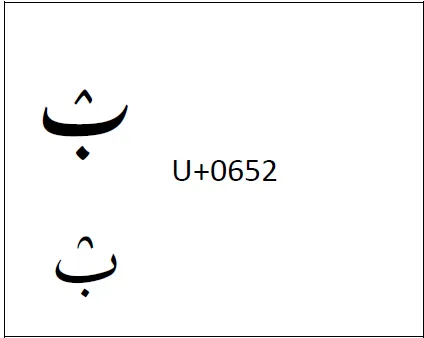
In Kashmiri, the ◌ْ is an open sukun with the opening facing down.
In Kashmiri, the ◌ٔ does not follow the Urdu design. It looks like the more standard Arabic-style hamza.
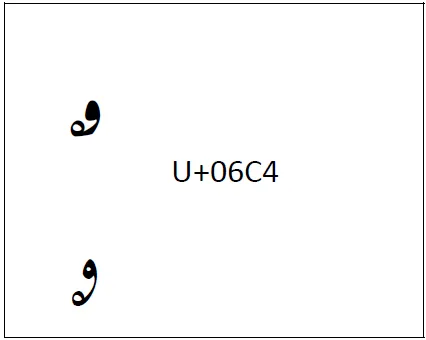
ۄ was specifically added for Kashmiri. However, the design in the Unicode charts has long been wrong. It has been corrected since Unicode 17.0 to the shape below. The tail should not extend beyond the circle.
Kashmiri digits follow the precedent set by Urdu. ۴ , ۶ , and ۷ have a different shape than in the Unicode charts.

◌ٟ was also added for the Kashmiri language.

See also Kashmiri orthography notes .
.