
Marking Tone
Abstract
Section titled “Abstract”This paper was originally intended to explain why pitch contours, which are used in linguistic analysis and documentation of tone languages, have been encoded in the SIL Corporate PUA and in our SIL Unicode Roman fonts. Section 1 covers the existing tone marking systems in Unicode. Section 2 provides the rationale for adding Pitch Contour characters to the PUA, and a detailed discussion of how such characters have been encoded and implemented (they have subsequently been removed).
Existing Systems in Unicode
Section titled “Existing Systems in Unicode”Unicode already supports many different systems for marking tone. These are discussed in the following subsections.
Superscript/Subscript numbers
Section titled “Superscript/Subscript numbers”Superscript numbers indicate a numbered toneme (e.g. 1 = first tone). In Chinese linguistics ¹ represents low tone and ⁵ represents high tone and Americanists represent ¹ as high tone and ⁵ as low tone. In African linguistics both orders are found. Appended numbers give tonal contours directly (e.g. 35 = high rising)
- ¹
- ²
- ³
- ⁴
- ⁵
- ₁
- ₂
- ₃
- ₄
- ₅
Sample usage: ²ah³ há²ah³ chia̱á̱h¹ah³ jnia²,
Sample usage: a₁jaun₂ ca₂rë₃chán₃ guein₂ ne₅₄
Issue: cannot be used in identifiers
Tone Diacritics and Contour tone marks
Section titled “Tone Diacritics and Contour tone marks”Diacritics often mark tone in orthographies as well as in linguistic writings. However, this method does not permit one to represent tone phonetically until after one has done phonological analysis.
- ◌̀ (low)
- ◌́ (high)
- ◌̂ (falling)
- ◌̌ (rising)
- ◌̄ (mid)
- ◌̍ (vert. mid)
- ◌᷇ (high-mid)
- ◌᷅ (low-mid)
- ◌᷄ (mid-high)
- ◌᷆ (mid-low)
- ◌᷈ (low-high-low)
- ◌᷉ (high-low-high)
Sample usage: ba᷄t, na᷇pfo tu᷅na, na᷅ mi᷆, bàlónga᷉káé, bɔ̌mɔ᷈támbá
Compound tone diacritics
Section titled “Compound tone diacritics”- 1ACF COMBINING DOUBLE CARON
- 1AD0 COMBINING VERTICAL-LINE-ACUTE
- 1AD1 COMBINING GRAVE-VERTICAL-LINE
- 1AD2 COMBINING VERTICAL-LINE-GRAVE
- 1AD3 COMBINING ACUTE-VERTICAL-LINE
- 1AD4 COMBINING VERTICAL-LINE-MACRON
- 1AD5 COMBINING MACRON-VERTICAL-LINE
- 1AD6 COMBINING VERTICAL-LINE-ACUTE-GRAVE
- 1AD7 COMBINING VERTICAL-LINE-GRAVE-ACUTE
- 1AD8 COMBINING MACRON-ACUTE-GRAVE
- 1AEC COMBINING CARON-ACUTE
- 1AED COMBINING VERTICAL-LINE-DOUBLE-ACUTE
- 1AEE COMBINING DOUBLE GRAVE ACCENT BELOW
- 1AEF COMBINING DOUBLE ACUTE ACCENT BELOW
- 1AF0 COMBINING DOUBLE COMMA ABOVE
Intermediate tone diacritics
Section titled “Intermediate tone diacritics”- 1ADE COMBINING GRAVE-DOT
- 1ADF COMBINING DOT-ACUTE
Modifier letters
Section titled “Modifier letters”Modifier letters are sometimes used to mark tone in orthographies. These are too numerous to discuss all the possibilities. However, a few examples are shown.
IPA Downstep/Upstep
Section titled “IPA Downstep/Upstep”IPA includes two symbols to indicate tonal downstep and tonal upstep. The IPA symbols for downstep and upstep are raised, half-height arrows. (IPA also has full-height arrows as distinct symbols, used to represent ingressive versus egressive airflow in disordered speech.)
- ꜜ (downstep)
- ꜛ (upstep)
Sample usage: yáꜛká, áꜜŋwú̙
Africanist Downstep/Upstep
Section titled “Africanist Downstep/Upstep”Africanist linguists have traditionally had their own preferred conventions for indicating downstep and upstep, which are different from the IPA-recommended symbols. Tonal downstep was indicated by using a superscript exclamation mark. For upstep, an inverted exclamation mark was used; in some publications this is superscripted, while in others it was subscripted.
Functionally, the down and up-arrows of the IPA are equivalent to the exclamation and inverted exclamation marks, respectively.
- ꜝ (downstep)
- ꜞ (upstep)
- ꜟ (subscripted upstep)
Sample usage: HꜝH, LꜞH, LꜟH, éꜝbéy ꜝméꜝmwét, baatí̧ꜞlyá ꜞkí̧ꜞndyé
Grammatical tone
Section titled “Grammatical tone”- ꞉
- ꞊
Sample usage: ge꞉zømas / a꞊heiso-ɔɔ / punctuation : =
Spacing clones of diacritics
Section titled “Spacing clones of diacritics”These are often used as orthographic characters.
- ˇ
- ˉ
- ˊ
- ˋ
- ˍ
- ˎ
- ˏ
- ˙
Lahu and Akha
Section titled “Lahu and Akha”These are spacing orthographic characters which are used for the Lahu and Akha languages of Southeast Asia.
- ˉ (high rising)
- ˇ (high falling)
- ˬ (low falling)
- ˍ (very low)
- ˆ (high checked)
- ꞈ (low checked)
Sample usage: Ngaˬ -ahˇ hawˬ maˬ mehꞈ nya si…
Marking tone in Chinantec
Section titled “Marking tone in Chinantec”These are spacing orthographic characters which are used for the Ozumacín Chinantec language of Mexico.
- ˉ
- ˋ
- ˈ
- ˊ
- ꜗ
- ꜘ
- ꜙ
- ꜚ
Sample usage: Jnäꜘ Paaˊ naˉhña̱a̱nˊ la̱a̱nˈ apóstol kya̱a̱ꜗ Jesucristo läꜙ hyohˉ dsëꜗ Dio. Ko̱ˉjø̱hꜘ kya̱a̱hˊ Sóstene ø̱ø̱hꜗ jneˊ,
Chao tone letters
Section titled “Chao tone letters”Right-stem Tone Letters
Section titled “Right-stem Tone Letters”Each tone letter refers to one of five distinguishable tone levels. To represent contour tones, the tone letters are used in combinations (see Tone Letters). This method does not have enough levels to mark the number of levels many African systems need.
- ˥
- ˦
- ˧
- ˨
- ˩
Font Features: with and without staves, tone numbers, ligated and not-ligated
Sample usage: ˥ + ˩ = ˥˩
Left-stem Tone Letters (tone sandhi)
Section titled “Left-stem Tone Letters (tone sandhi)”In Chinese linguistics, utterances in which tone sandhi occurs are sometimes transcribed using paired tone letters: one right-stemmed tone letter on the left, indicating the underlying tone, and a left-stemmed tone letter on the right, indicating the surface “sandhi” tone (see Comments on N2626, Proposal on IPA Extensions & Combining Diacritic Marks for ISO/IEC 10646 in BMP, p. 9).
- ꜒
- ꜓
- ꜔
- ꜕
- ꜖
Font Features: with and without staves, tone numbers, ligated and not-ligated
Sample usage: ˦ + ꜔ + ꜓ = ˦꜔꜓ (Some fonts do not render these properly, see example below.)

Dotted tone letters
Section titled “Dotted tone letters”Dot tone letters are used in Chinese linguistics to indicate tones in certain weakly-stressed syllables having a less-distinct quality—there is little or no pitch variation, and the duration is short. These are often referred to in Chinese linguistics as “neutral tones” (see Comments on N2626, Proposal on IPA Extensions & Combining Diacritic Marks for ISO/IEC 10646 in BMP, p. 12). Left-stemmed and dotted tone letters are used contrastively.
- ꜈
- ꜉
- ꜊
- ꜋
- ꜌
- ꜍
- ꜎
- ꜏
- ꜐
- ꜑
Font Features: with and without stems
Corner tone marks
Section titled “Corner tone marks”These tone symbols are used by Chinese linguists. Corner tone marks are a distinct transcription tradition from stemmed tone letters.
- ꜀
- ꜁
- ꜂
- ꜃
- ꜄
- ꜅
- ꜆
- ꜇
Pinyin
Section titled “Pinyin”- ◌̀ (fourth tone)
- ◌́ (second tone)
- ◌̄ (first tone)
- ◌̌ (third tone)
- ǎ (third tone)
- ǐ (third tone)
- ǒ (third tone)
- ǔ (third tone)
- ǖ (first tone)
- ǘ (second tone)
- ǚ (third tone)
- ǜ (fourth tone)
Vietnamese tone marks
Section titled “Vietnamese tone marks”- ◌̃
- ◌̉
- ◌̣
- ◌̀ (discouraged)
- ◌́ (discouraged)
UPA tone markers
Section titled “UPA tone markers”- ˹
- ˺
- ˻
- ˼
- ꜠
- ꜡
Lithuanian
Section titled “Lithuanian”- ◌᷋ (Contour tone)
- ◌᷌ (Contour tone)
- ⭎ (slight rise in tone)
- ⭏ (slight fall or overall fall in tone when at the end of a word or at the beginning of a phrase, respectively)
- ⭚ (increasing tone with falling trend at the end)
- ⭛ (sharp rise and fall in tone)
- ⭜ (continued rise in tone)
- ⭝ (continued fall in tone)
- ⭞ (sharp fall in tone with rising trend at the end)
- ⭟ (slight fall in tone with rising trend at the end)
Zhuang orthographic tones
Section titled “Zhuang orthographic tones”- Ƅ
- ƅ
- Ƨ
- ƨ
- Ƽ
- ƽ
Tone in other scripts
Section titled “Tone in other scripts”Scripts such as Ethiopic, Lao, Thai, Tai Le, New Tai Lue and Nko, all have systems for marking tone. There are a few other characters in the Unicode Standard which have the word tone in their name or their decomposition.
Bodo and Dogri
Section titled “Bodo and Dogri”- ʼ
Sample usage from Dogri: ति’लकना
Extended Bopomofo tone marks
Section titled “Extended Bopomofo tone marks”- ˪
- ˫
- ◌߫
- ◌߬
- ◌߭
- ◌߮
- ◌߯
- ◌߰
- ◌߱
- ߴ
- ߵ
Sample usage: ߡߌ߬ߛߌ
Rohingya (Arabic script)
Section titled “Rohingya (Arabic script)”The rule is: if a letter has a vowel symbol that is positioned above the consonant, then the tone mark goes above the vowel symbol. If the vowel symbol is below the consonant, then the tone mark goes below the vowel symbol (tone marks will never appear if there is no vowel symbol).
- ◌࣪
- ◌࣫
- ◌࣬
- ◌࣭
- ◌࣮
- ◌࣯
Sample usage: حࣤ࣬وُ

Vedic tone marks
Section titled “Vedic tone marks”- ◌॑
- ◌॒
- ◌᳴
- ◌᳸
- ◌᳹
- ◌᳐
- ◌᳑
- ◌᳒
- ◌᳕
- ◌᳖
- ◌᳗
- ◌᳘
- ◌᳙
- ◌᳚
- ◌᳛
- ◌᳜
- ◌᳝
- ◌᳞
- ◌᳟
- ◌᳠
- ◌᳡
- 113E1 TULU-TIGALARI VEDIC TONE SVARITA
- 113E2 TULU-TIGALARI VEDIC TONE ANUDATTA
- ◌่
- ◌้
- ◌๊
- ◌๋
- ◌່
- ◌້
- ◌໊
- ◌໋
Myanmar
Section titled “Myanmar”- ◌့
- ◌ႇ
- ◌ၣ
- ◌ၤ
- ◌ၩ
- ◌ၪ
- ◌ၫ
- ◌ၬ
- ◌ၭ
- ◌ႈ
- ◌ႉ
- ◌ႊ
- ◌ႋ
- ◌ႌ
- ◌ႍ
- ◌ႏ
- ◌ႚ
- ◌ႛ
- ◌ꩻ
- ◌ꩼ
- ◌ꩽ
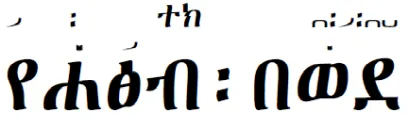
Ethiopic tonal marks
Section titled “Ethiopic tonal marks”- ᎐
- ᎑
- ᎒
- ᎓
- ᎔
- ᎕
- ᎖
- ᎗
- ᎘
- ᎙
Tai Le
Section titled “Tai Le”- ᥰ
- ᥱ
- ᥲ
- ᥳ
- ᥴ
New Tai Lue
Section titled “New Tai Lue”- ᧈ
- ᧉ
Tai Tham
Section titled “Tai Tham”- ◌᩵
- ◌᩶
- ◌᩷
- ◌᩸
- ◌᩹
Ideographic combining tone marks
Section titled “Ideographic combining tone marks”- ◌〪
- ◌〫
- ◌〬
- ◌〭
- ◌〮
- ◌〯
- ꓸ
- ꓹ
- ꓺ
- ꓻ
- ꓼ
- ꓽ
Kayah Li
Section titled “Kayah Li”- ◌꤫
- ◌꤬
- ◌꤭
Tai Viet
Section titled “Tai Viet”- ◌꪿
- ꫀ
- ◌꫁
- ꫂ
Meetei Mayek
Section titled “Meetei Mayek”- ◌꯬
Hanifi Rohingya
Section titled “Hanifi Rohingya”- ◌𐴤
- ◌𐴥
- ◌𐴦
Pau Cin Hau
Section titled “Pau Cin Hau”- 𑫥
- 𑫦
- 𑫧
Bassa Vah
Section titled “Bassa Vah”- ◌𖫰
- ◌𖫱
- ◌𖫲
- ◌𖫳
- ◌𖫴
- ◌𖾏
- ◌𖾐
- ◌𖾑
- ◌𖾒
- 𖾓
- 𖾔
- 𖾕
- 𖾖
- 𖾗
- 𖾘
- 𖾙
- 𖾚
- 𖾛
- 𖾜
- 𖾝
- 𖾞
- 𖾟
- 𚿰
- 𚿱
- 𚿲
- 𚿳
- 1AFF5 KATAKANA LETTER MINNAN TONE-7
- 1AFF6 KATAKANA LETTER MINNAN TONE-8
- 1AFF7 KATAKANA LETTER MINNAN NASALIZED TONE-1
- 1AFF8 KATAKANA LETTER MINNAN NASALIZED TONE-2
- 1AFF9 KATAKANA LETTER MINNAN NASALIZED TONE-3
- 1AFFA KATAKANA LETTER MINNAN NASALIZED TONE-4
- 1AFFB KATAKANA LETTER MINNAN NASALIZED TONE-5
- 1AFFD KATAKANA LETTER MINNAN NASALIZED TONE-7
- 1AFFE KATAKANA LETTER MINNAN NASALIZED TONE-8
Nyiakeng Puachue Hmong
Section titled “Nyiakeng Puachue Hmong”- ◌𞄰
- ◌𞄱
- ◌𞄲
- ◌𞄳
- ◌𞄴
- ◌𞄵
- ◌𞄶
- ◌𞊮
Wancho
Section titled “Wancho”- ◌𞋬
- ◌𞋭
- ◌𞋮
- ◌𞋯
Sample usage: 𞋅𞋜 𞋅𞋜𞋮 𞋅𞋜𞋯 𞋅𞋜𞋯
9-level pitch contours
Section titled “9-level pitch contours”Existing tone systems in Unicode distinguish up to 5 levels of tone. However, there is a 9-level system, used mainly by Africanists. The nine level system includes contour pitch marks and is used for phonetic transcriptions of tone languages. For this reason these characters are referred to as pitch rather than tone contours. This system is widely used by Africanists, not only for transcribing raw phonetic data prior to tone analysis, but for archiving and producing linguistic documents. Smart-font tables within a Graphite or OpenType font would substitute glyphs for angled bars indicating pitch contours based on what sequence of pitch-level characters occur together. Initially, we encoded the nine pitches in our Private Use Area (PUA). The pitch contours had to have a high line height in order to distinguish between the levels of pitch. The square brackets had to be large enough to encompass all 9 pitches. It was difficult to design the line spacing, and the square brackets, to fit with the pitches, but also be suitable for normal font usage. Our solution was not well accepted. Thus, we removed these characters from SIL’s Latin fonts, and users continue to use the legacy font solution.
Encoding and Properties
Section titled “Encoding and Properties”The pitch contours were implemented as modifier letters, not as combining marks.
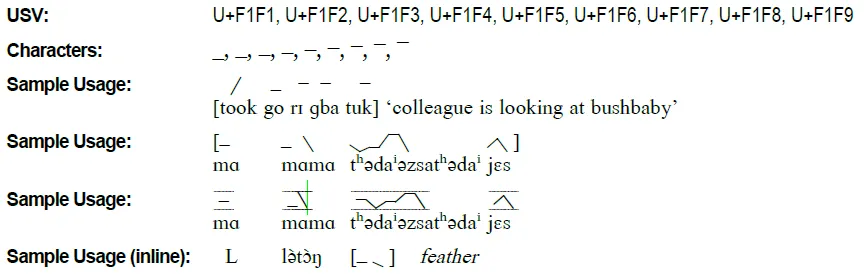
Properties:
F1F1;MODIFIER LETTER PITCH ONE;Sk;0;ON;;;;;N;;;;;F1F2;MODIFIER LETTER PITCH TWO;Sk;0;ON;;;;;N;;;;;F1F3;MODIFIER LETTER PITCH THREE;Sk;0;ON;;;;;N;;;;;F1F4;MODIFIER LETTER PITCH FOUR;Sk;0;ON;;;;;N;;;;;F1F5;MODIFIER LETTER PITCH FIVE;Sk;0;ON;;;;;N;;;;;F1F6;MODIFIER LETTER PITCH SIX;Sk;0;ON;;;;;N;;;;;F1F7;MODIFIER LETTER PITCH SEVEN;Sk;0;ON;;;;;N;;;;;F1F8;MODIFIER LETTER PITCH EIGHT;Sk;0;ON;;;;;N;;;;;F1F9;MODIFIER LETTER PITCH NINE;Sk;0;ON;;;;;N;;;;;Position
Section titled “Position”The lowest pitch is below the baseline; it is at the level of the lowest arm of a square bracket.
The highest pitch is slightly above cap height; it is at the level of the top arm of a square bracket.

Smart fonts
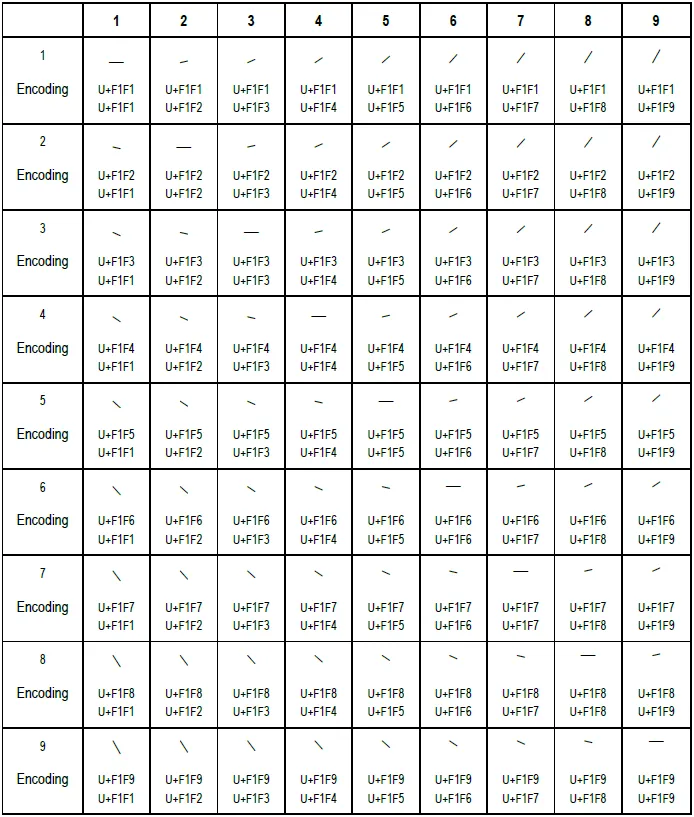
Section titled “Smart fonts”The font should contain Graphite rules for converting a sequence of the nine-pitches to the contours. For example U+F1F1 U+F1F9 U+F1F4 U+F1F7 would be rendered as:

Following Chao notation, two of the same pitch bars, such as <U+F1F5 U+F1F5>, render as a double-length bar.
Preventing ligation of adjacent characters
Section titled “Preventing ligation of adjacent characters”A space can be used to prevent ligation of adjacent characters. If no space is wanted between characters U+200C ZWNJ could be used. A problem will happen if a program does not properly interprets ZWNJ and users try other ways to get the appearance they want. An opening or closing bracket should never be put on a separate line, for example. If a vertical bar U+0070 or double bar U+2016 are used to separate intonation groups, line breaking should work properly (probably to break after the bar). In this case U+2060 WORD JOINER may be appropriate and necessary before the bar.
Font features
Section titled “Font features”The features we implemented in SIL’s Unicode Roman fonts were
- without (default) and with tramlines (if brackets are desired, the user would type them in). A space (U+0020) is the only other character we implemented tramlines for.
- ligated (default) and non-ligated
Converting data between tone-bar or pitch-contour notation and superscript-numeral notation should be considered as a change to the underlying text, not a glyph alternate for some “abstract” pitch character. It would be similar to converting between IPA and “Americanist” phonetic notation, or between Latin and Cyrillic orthographies for a Central Asian language, etc. Thus, we believe that TECkit mapping files should be created (these have not yet been created) to convert between the different systems and font features should not be used.
Font issues
Section titled “Font issues”In order to allow for the largest size possible for the pitch contours we placed them as far down as is reasonable (at the bottom arm of the square bracket) and as high as possible (at the top arm of the square bracket). We felt this implementation would not interfere with other uses for the font. If larger pitch contours are desired, the point size can be changed in a document.
The tones and pitch contours are all the same width. However, because they are in proportional fonts there will always be the problem of horizontal alignment of the pitch contours with segmental symbols on a line above or below. Software solutions to this alignment issues could include treating them as interlinear text.
In the end, this solution was not found acceptable to users, and they have continued using the legacy fonts.
Publications which use the pitch contour notation
Section titled “Publications which use the pitch contour notation”- Anderson, Stephen R. 1978. Tone features. In Victoria A. Fromkin (ed.). Tone: A Linguistic Survey. New York: Academic Press, pp. 133-175.
- Clark, Mary. 1993. Representation of downstep in Dschang Bamileke. In Harry Van der Hulst and Keith Snider (eds.). The Phonology of Tone: The Representation of Tonal Register. Berlin: Mouton de Gruyter, pp. 31, 39.
- Hyman, Larry M. 1979. A reanalysis of tonal downstep. Journal of African Languages and Linguistics 1.1:9-29.
- Laughren, Mary. 1984. Tone in Zulu nouns. In Autosegmental Studies in Bantu Tone edited by G.N. Clements & John Goldsmith. Dordrecht: Foris Publications, pp. 223-225.
- Pulleyblank, Douglas. 1986. Tone in Lexical Phonology. Dordrecht: D. Reidel Publishing Co., pp. 27, 28, 30, 31, to name a few places.
- Snider, Keith. 1990. Tonal upstep in Krachi: evidence for a register tier. Language 66.3: 453-474.
- Snider, Keith. 1998. Phonetic realisation of downstep in Bimoba. Phonology 15.1: 77-101.
- Yip, Moira. 2002. Tone. Cambridge: Cambridge University Press. Various places throughout when needed, e.g., pp. 149, 150, 266.
Article copyright © 2007-2026 SIL Global with license CC BY-SA 3.0. Author: Lorna Priest Evans.
This article formerly appeared on scripts.sil.org.