
Dagger-Alef in Arabic Script
In order to implement correct behavior in fonts for the dagger-alef ( ◌ٰ ), one needs to understand how it should appear. Although there are exceptions, the dagger-alef is not generally written in modern texts, it is primarily used in classical texts.
Regarding the dagger-alef, Fahmy (Fahmy, Hossam A. H. 2006, Vol 27, No 2. AlQalam for typesetting traditional Arabic texts. TUGBoat. p. 164 ) says:
“It is considered a separate character that appears on its own in cases such as

On the other hand, it is considered a mark on top of the underlying character in cases such as
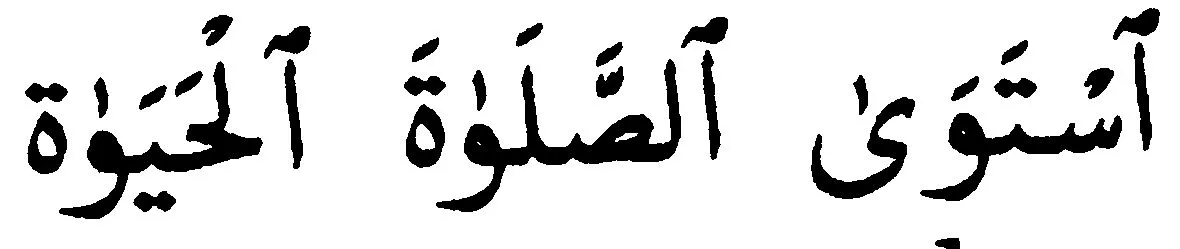
If the dagger alif is a mark, its positioning on the character is similar to that of the short vowels.”
In the case of dagger-alef as a “separate character”, dagger-alef should be placed above a space or even above . (Unfortunately, Microsoft Word does not support the dagger-alef on a space. However, LibreOffice does support it.) When developing a font, and must support putting a combining mark (such as ◌ٰ ) above the space. See dagger-alef above the space in the first word of the first sample above.
In general, if dagger-alef is above a “tooth” then the anchor point for the dagger-alef should be centered above the tooth (there are some who disagree with this and believe the dagger-alef should be slightly to the left of the “tooth”). The example below shows the dagger-alef above the tooth of both the initial and medial yeh:
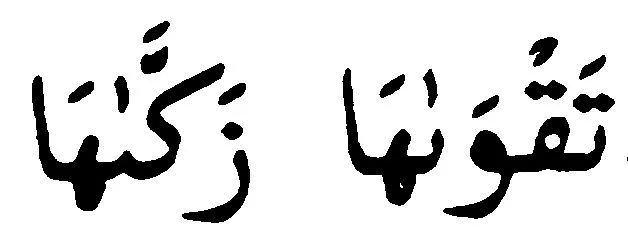
If a consonant has a vowel above it (such as the fatha) followed by a dagger-alef, then a kashida ( ـ ) can be inserted before the dagger-alef. This places the dagger-alef after the consonant (rather than above the fatha) but before the next consonant. See dagger-alef between the meem and the waw below:
Some fonts will offset the dagger-alef a little to the left if the character already has a fatha or another vowel above it.
Implementation Issues
Section titled “Implementation Issues”A larger dagger-alef may be desired on characters with a large isolate or final deep tail. Compare the first two lines with the red characters in the last two lines.
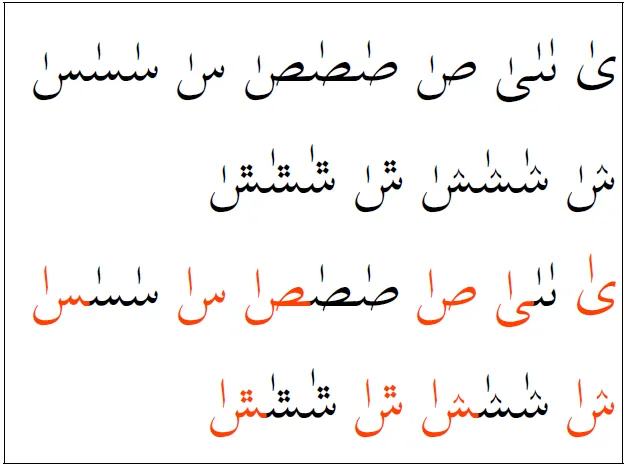
Some traditions, and on some characters, the dagger-alef should be positioned in a slightly different position than other combining marks. Compare the first example with fatha above with the following example with the dagger-alef above.
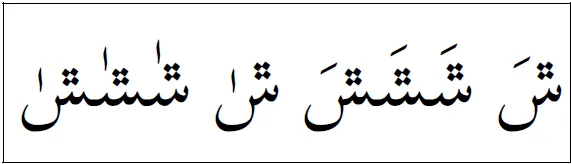
In the SIL implementation to support this behavior, we have two above attachment points. The diaA anchor is used for positioning almost all above combining marks. The alef anchor is used for positioning dagger-alef.
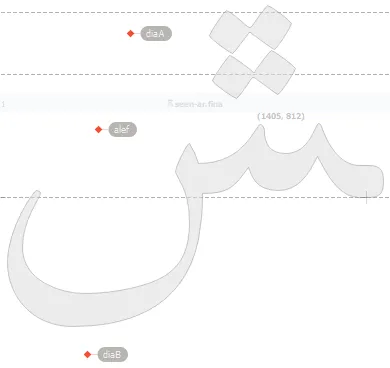
In the GPOS lookup, we have the following code:
# Override mark positioning in the case of dagger-alef on certain chars:lookup AlefToBase { lookupflag 0; pos base @alef mark @_alef;} AlefToBase;That lookup is used in the mark feature, and not in mkmk:
feature mark { # Mark to base Positioning # Same for latin & arabic: lookup MarkToBase; lookup AlefToBase; script arab; lookup MarkToLig;...} mark ;In another style of font, the dagger-alef is positioned after the fatha.
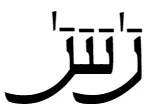
In this example the dagger-alef and fatha form one glyph called fatha_alefabove-ar. The Opentype code, in ccmp is:
sub fatha-ar alefabove-ar by fatha_alefabove-ar;